

HYPOBATT successfully completes public demonstration of multi-megawatt charging system for electric ferries in Norddeich

Norddeich, Germany – 18 February 2026 – The European research and innovation project HYPOBATT has successfully carried out its final public demonstration, marking a major milestone for the electrification of maritime transport in Europe. The event showcased, under real port conditions, a fully operational multi-megawatt fast-charging system specifically designed to meet the demanding requirements of commercial ferry operations.
The demonstration confirmed that high-power charging for maritime applications has moved beyond pilot concepts and is now a scalable and operational solution for everyday port use. The HYPOBATT charging infrastructure was validated in a live operational environment, demonstrating reliable system integration, safe automated connection, and high-power energy transfer within tight operational turnaround times.
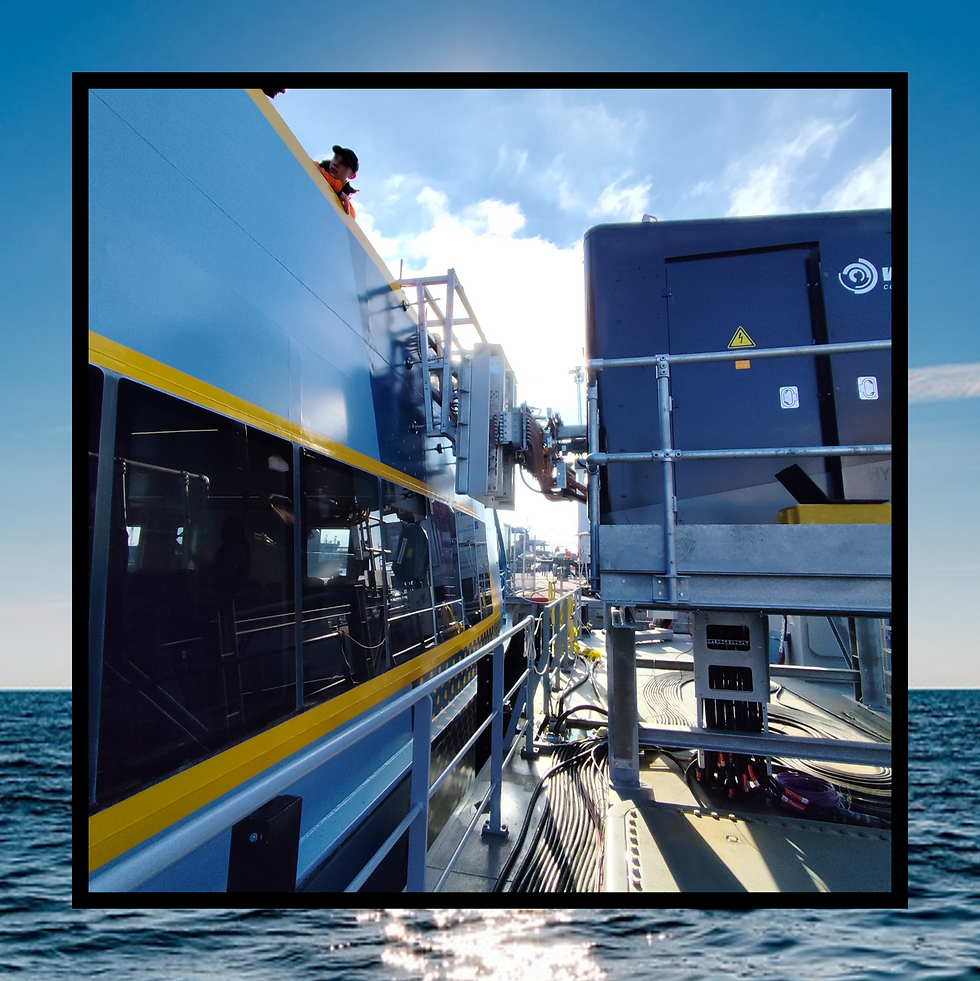
The HYPOBATT project was launched to remove key barriers to electric ferry operations by developing a modular, high-power charging architecture that enables fast and efficient energy transfer between shore and vessel. The project brings together 18 partners from ten European countries and is co-funded under the Horizon Europe framework.
During the demonstration, the consortium validated several core performance targets, including rapid automated connection after mooring, stable multi-megawatt charging at a power level of up to 2 MW, and advanced energy management functions that support both improved system efficiency and extended battery lifetime. The system has also been developed in alignment with the emerging Megawatt Charging System (MCS) standard, enabling future interoperability between different ports and vessel types across Europe.
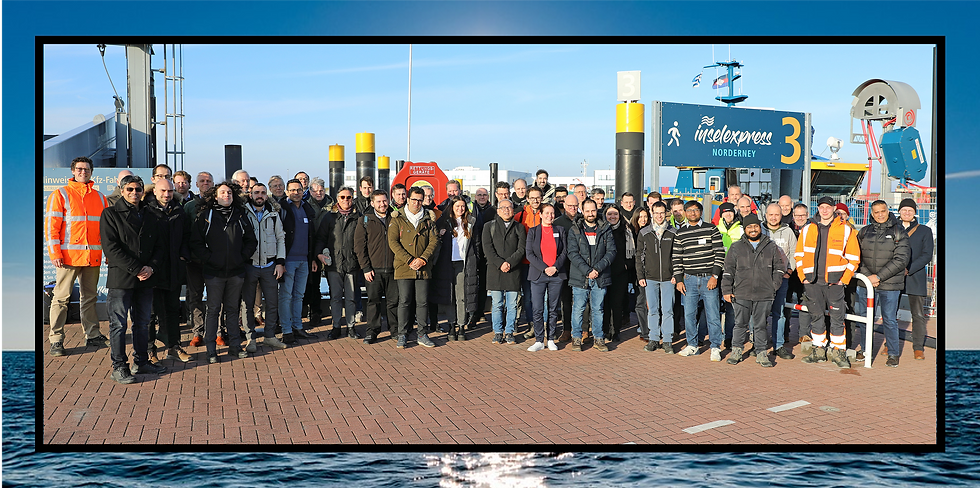
The demonstration was carried out on a vessel operated by Reederei Norden-Frisia, providing a real-world validation scenario on an active ferry route in the North Sea region. The selected application illustrates the strong potential of the HYPOBATT solution for short-sea shipping, where frequent departures and short port calls require highly reliable and fast charging processes.
Beyond ferry operations, the modular design of the HYPOBATT charging station enables future use for other electric port assets and vehicles, supporting a broader decarbonisation of port operations.
Following the successful public demonstration, the project partners are currently consolidating and analysing the final technical results. These findings will support further industrialisation, standardisation activities and future commercial deployment of multi-megawatt charging infrastructure for maritime applications.
With HYPOBATT, Europe demonstrates its technological leadership in high-power charging for zero-emission shipping and takes an important step towards enabling clean, efficient and fully electric maritime transport at scale.
